On a day like this but not this day
2025
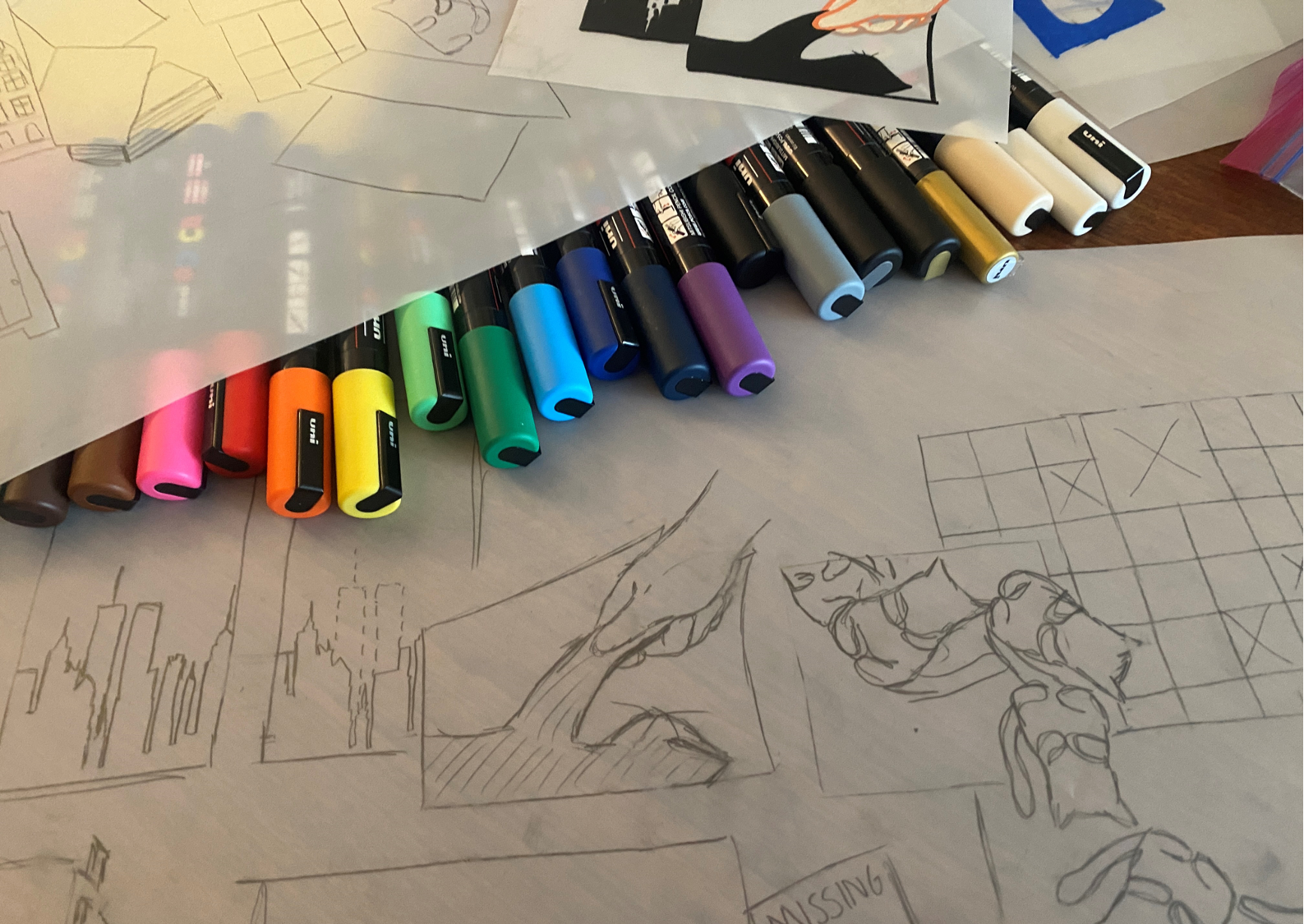
In 2025 my daughter Beatrice Apikos-Bennett and I started organizing things that we had put in storage – outgrown and out used things from childhood, school, moves and more moves, divorce, some things broken and in want of repair when time could be found for fixing them. I felt the weight of some of these objects but also felt the joy of finding things that I had forgotten. Inside that storage unit I became the archeologist of my own past.

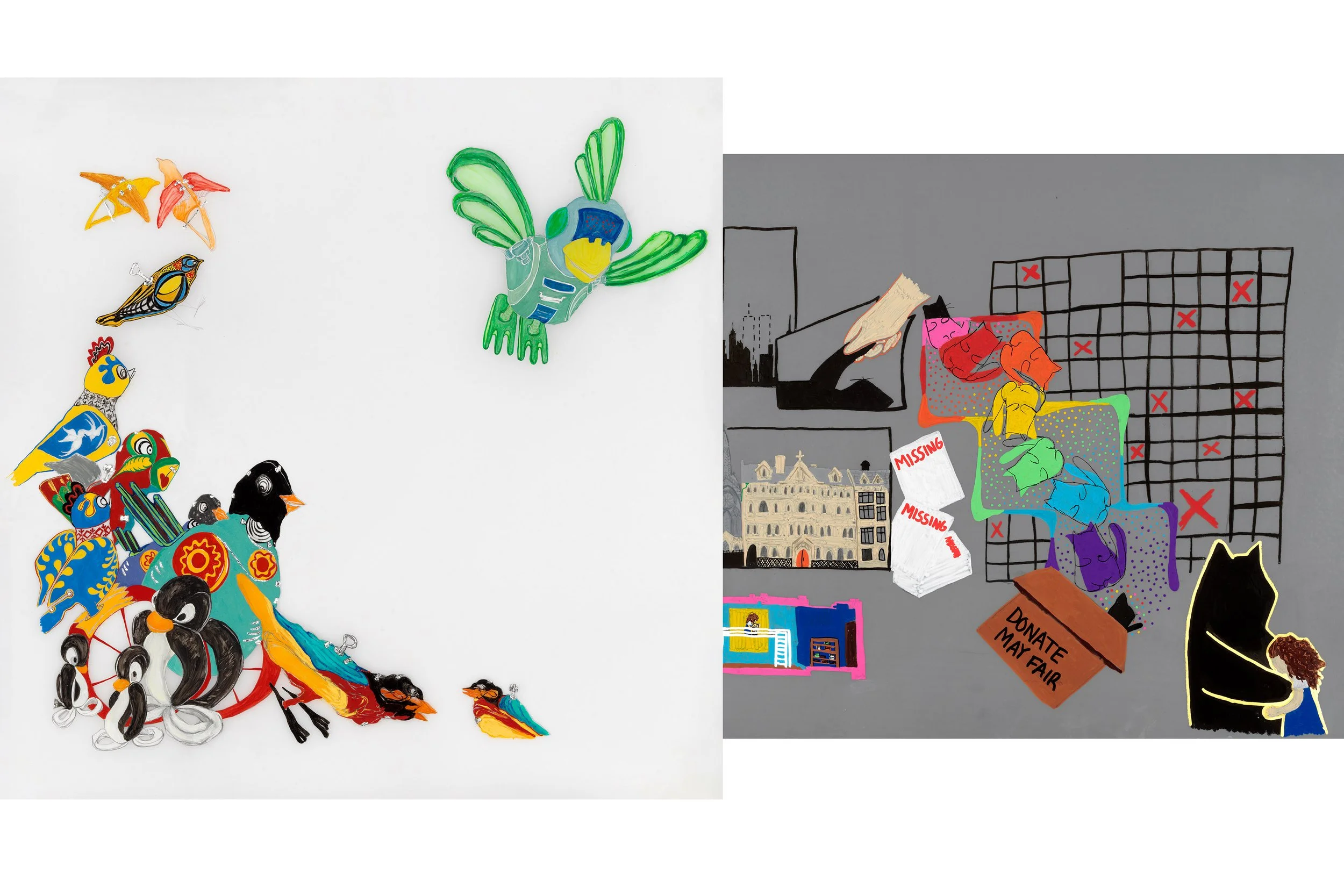
Both Beatrice and I created art from our experience inside storage. For me, two paintings of antique and vintage mechanical birds painted in analog colors that I replicated using casein.
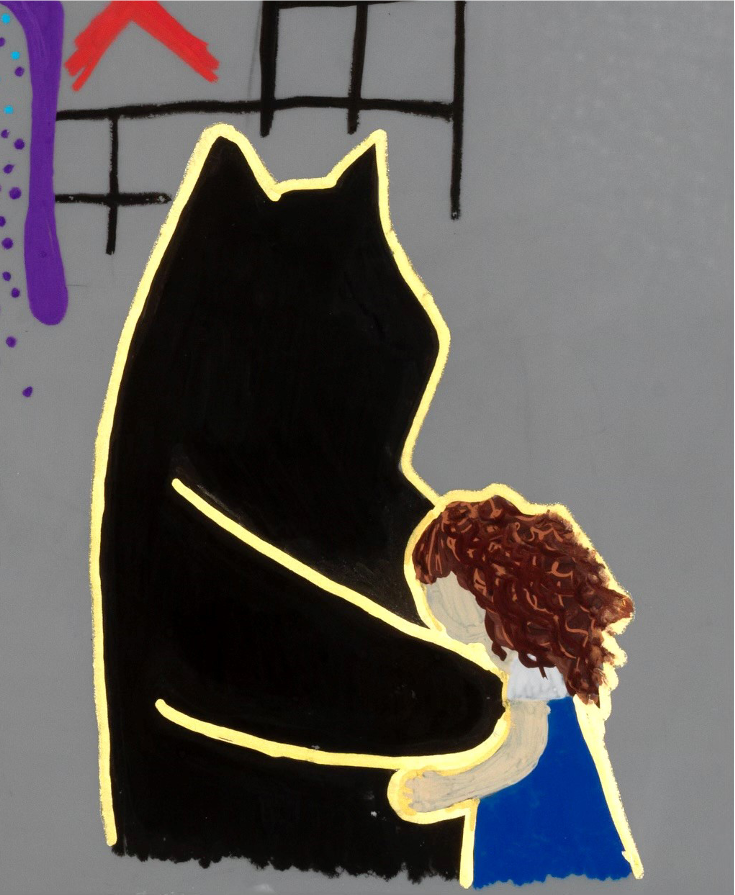
For Beatrice, a memoir in the form of a graphic novella about the trifecta of loss that occurred when she began 1st grade – the attack on the Twin Towers on 9/11, the theft of a beloved stuffed animal, and beginning at a new school. We both worked on Duralar, a synthetic translucent vellum.
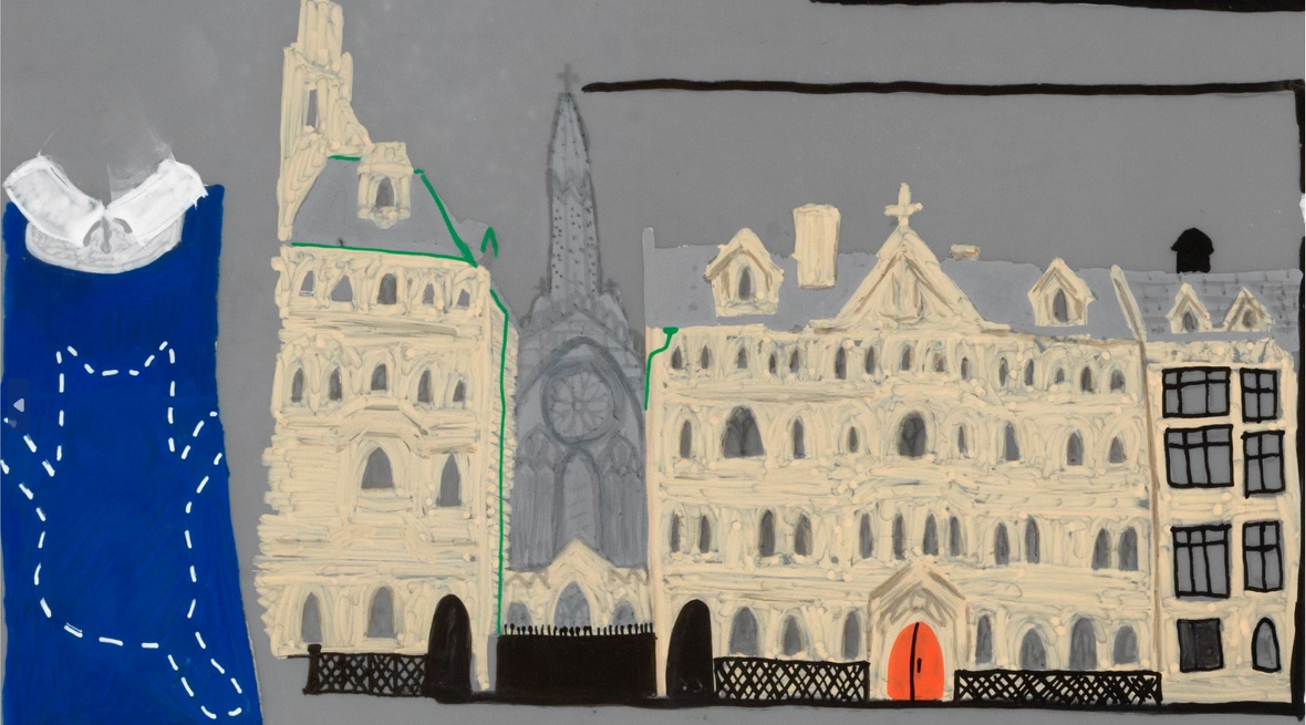
We wrote a paper about our experience and how we came to understand our memories and presented it at a conference. We titled our paper “On a Day Like This But Not This day: The importance of Intergenerational Memory.”
After we finished our presentation there was a long silence. Nobody asked us anything. I realized that we had created an open space for people to think about what we had done and what doing intergenerational or ancestral work looks like. Then somebody said “At first I thought how trivial the topic was – a paper about childhood toys and memories of color. Then I realized how jealous I am that you both created this bridge across generations. The paper was about building that bridge and I am envious of both of you.”
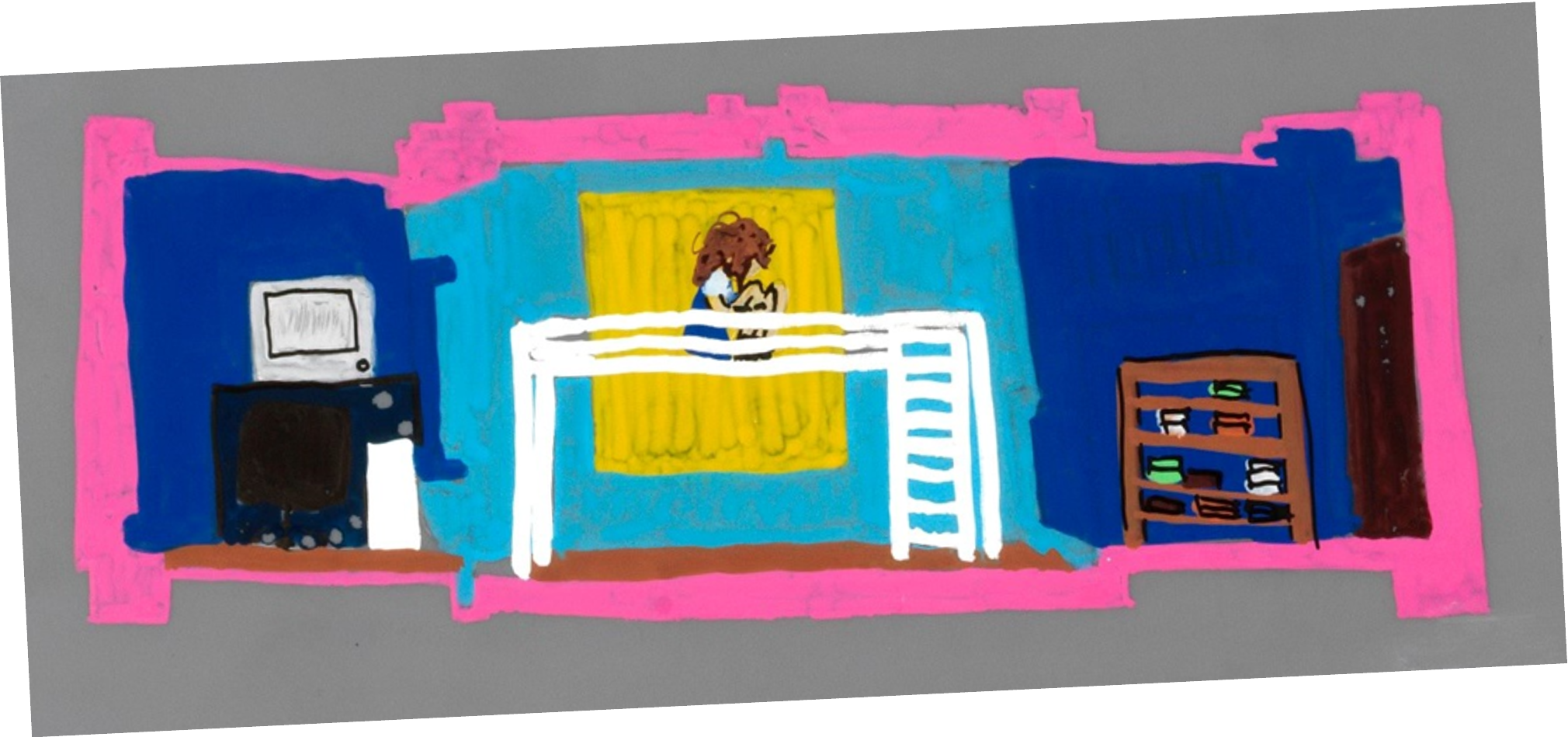


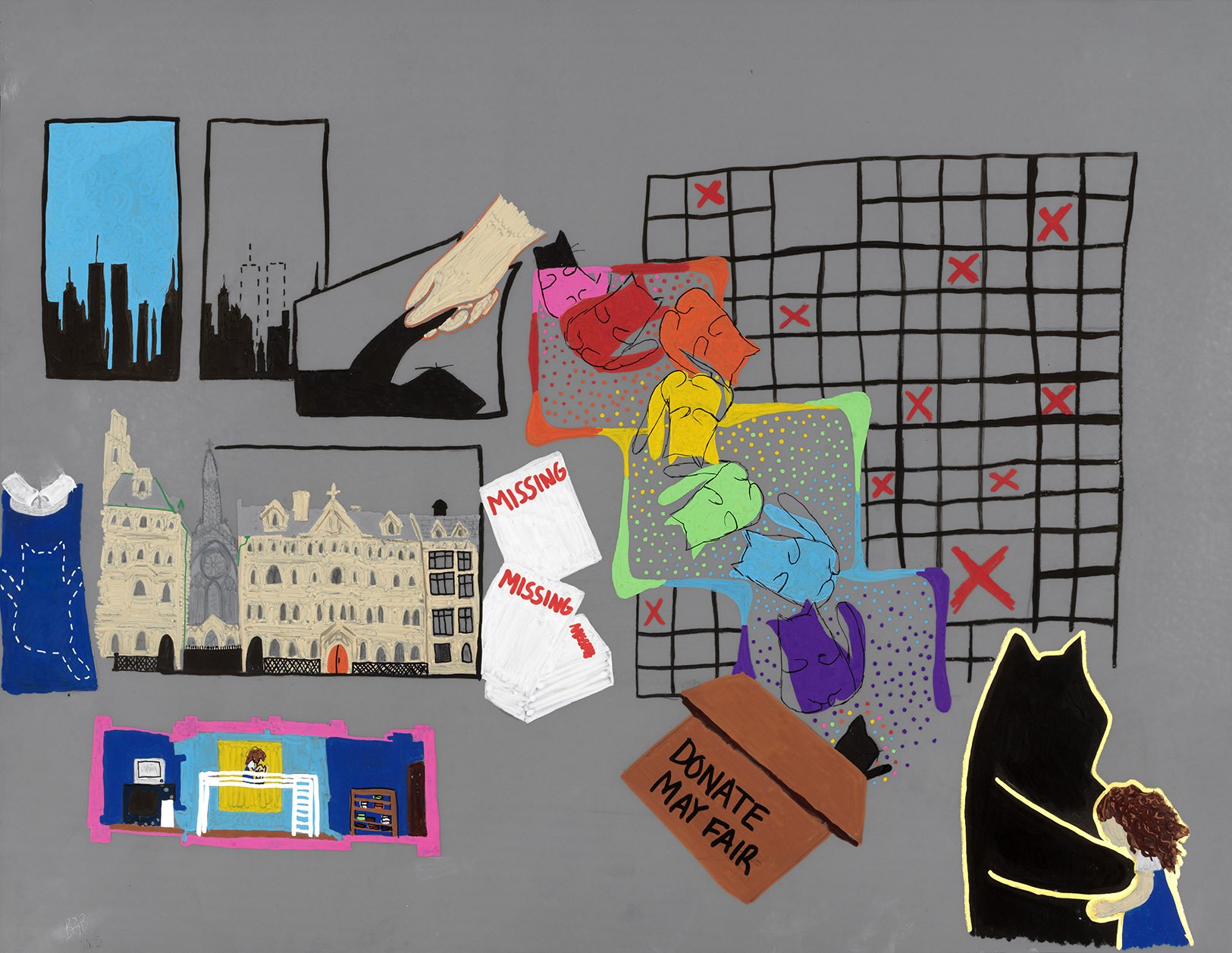
Beatrice writes:
For me, I realized through this work how important visual storytelling is when retelling the experiences of the childself.
Mary writes:
For me, when I look at our paintings together they reveal that color perception and memory are constructed out of uniquely generational experiences.
Finally and most importantly, this collaboration has deepened our understanding that how we use our memories is as important as what we remember.